Monday, June 17, 2013

Book Review: A History of Food in 100 Recipes by William Sitwell


Published by: Little, Brown and Company
Published on: June 18, 2013
Page Count: 360
Genre: Cookbook, history
My Reading Format: Advanced reading copy in e-book provided by the publisher through NetGalley
Available Formats: Hardcover, Kindle book


My Review: 

William Sitwell, food writer and television personality in Great Britain bid on several 19th century cookbooks at an auction in 2010 and won them. While reading through them later, the idea for this book was born. What he discovered was that even centuries ago, those who wrote down recipes became authorities on food, and therefore, in some cases, also culture and hospitality, either in his or her own circle of friends or to a larger audience. Things haven't changed much over the years. With more research, Sitwell chose 100 recipes written down by cooks that we may already be familiar with or have never heard of. Either way, those recipes, in some way, shaped the food culture of its time. (He makes the disclaimer early that a recipe from centuries past may not be cookable by someone in a modern kitchen today, but that some of his chosen recipes would be.) Starting with ancient Egyptian bread, the recipe for which was painted on the wall of a tomb in 11 BC, Sitwell takes us through food history, all the way to modern-day recipes by cooks that are a regular part of our lives through their books or television shows today.

Though the 100 recipes are from a wide range of countries and cultures, Sitwell's cultural references are heavily British assuming in places that his readers will know exactly what he's talking about. I didn't always. However, that didn't take much away from my enjoyment of the book. 

I enjoyed reading about recipes I'd never heard of and never realized what a major impact some of them had in their time. Some of those were very interesting, such as John Evelyn who was the first person to advocate for salads and create a dressing for them in the 1600s and Mary Eales, who invented ice cream in 1718. As an American, the buttered apple pie recipe from Amelia Simmons' American Cookery in 1796 was an important one, as was Eliza Leslie's cupcake recipe from her 1834 book Miss Leslie's Behaviour Book: A Guide and Manual for Ladies. Also included were other fun things like the evolution of the cocktail party in the mid-20th century, the start of Gourmet magazine and epicurious.com, and today's TV food personalities like Emeril, Mario Batali and Jamie Oliver, and food personalities we'll never forget (i.e. Julia Child).   

If you're interested in food culture and its history, both ancient and modern, you'll like A History of Food in 100 Recipes. 

Four out of five stars

If you think you'll like this book, I also recommend Eating by Jason Epstein.

Friday, June 14, 2013

Silver Linings Playbook and Building My Own Syllabus

Last week I was putting together my syllabus for a year-long American literature course I'll be teaching to ninth and tenth graders at a homeschool co-op starting in the fall, my favorite genre. There are so many wonderful things I've considered including that I needed advice and perspective from others to help me make sure I wasn't overloading the class. So I tossed the question out on Facebook to find out people's favorite and least favorite books they read in high school. For my purposes this time I threw out everything that wasn't American lit and made my choices from the feedback I got.

Did you see Silver Linings Playbook a few months ago when it was out? I loved the complex characters, plot and the balance between funny and serious moments throughout the film. I thought Bradley Cooper as the main character Pat was wonderful. While I liked him just fine in The Hangover and Wedding Crashers, I loved seeing what else he could do.

I just read the book version by Matthew Quick earlier this week. There are some big differences between the book and the movie, but I liked each of them for different reasons. In both the book and the movie Pat is trying to win back his ex-wife by getting in shape and reading everything she has put on the syllabus for her high school English students. Though he doesn't love what she's selected, he plows through them, looking forward to the day when he'll be reunited with his ex-wife and they can discuss the novels.

Two-thirds of the books Pat reads are ones I've chosen for my syllabus: The Great Gatsby, A Farewell to Arms, The Scarlet Letter and Huckleberry Finn. The two Pat read that I didn't pick are The Catcher in the Rye (which almost made it on to the syllabus. If I teach this class again I might teach this one.) and The Bell Jar

Here are the rest of the novels that made it in: My Antonia, Of Mice and Men and The Color Purple. We'll also read A Streetcar Named Desire and bits and pieces of Phyllis Wheatley, Anne Bradstreet, Thoreau, Whitman, Emerson, Sandburg and Dickinson. I'm looking forward to rereading all these classics myself to prepare.

Have I missed anything What other books do you consider to be important to American literature?

Tuesday, June 4, 2013

Simon Callow's Charles Dickens

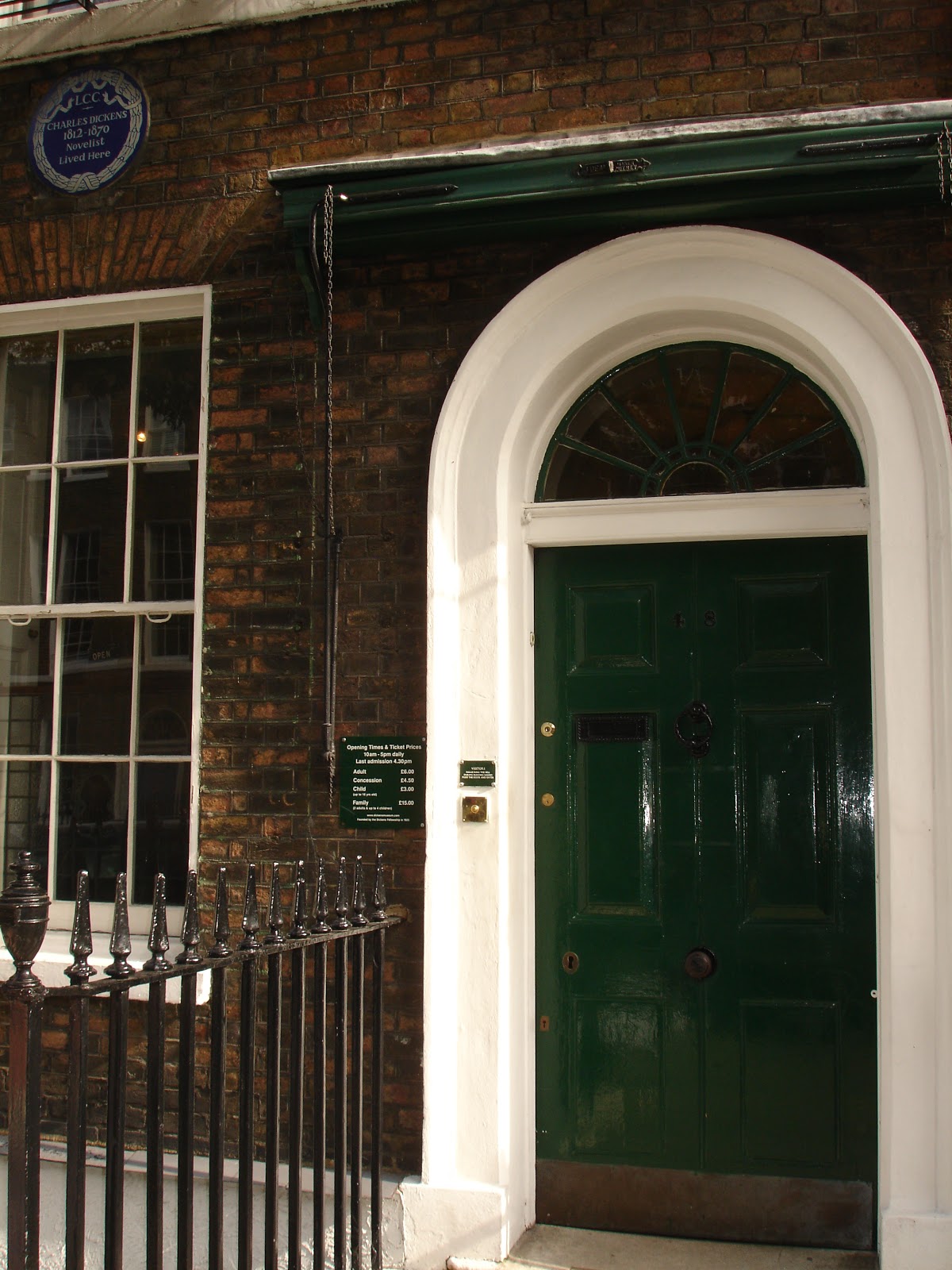
Two people have recently said exactly the same thing to me: that I must be planning to assign a lot of Dickens to my high schoolers this fall, because I'd loaded my Goodreads to-read shelf with a bunch of his novels. The real reason is that I've just finished Simon Callow's new biography, Charles Dickens (or called Charles Dickens and the Great Theatre of the World in the U.S.), which I picked up in London to coincide with Callow's one-man play on Dickens which I saw (it was wonderful, by the way). For nearly two hours Callow gave the audience Dickens' bio, hitting all the highlights of his interesting life. Sound a little boring? It wasn't. Callow was highly entertaining. So was his book. I'd learned a lot of new information about Dickens on my 2010 trip to London when I visited his house museum in Bloomsbury. A lot of what Callow did for me though was give both extra information and a fresh perspective on what I already did know about Dickens. Also while reading the bio, I realized how few novels by Dickens I've actually read (only Bleak House, Great Expectations, A Tale of Two Cities and A Christmas Carol), so I'm motivated to change that. I've got Oliver Twist downloaded onto my Kindle to start when the right moment comes. Here are a few photos from the Charles Dickens Museum:


Monday, June 3, 2013

It's Monday. What are you reading?

 3


This event is hosted by Sheila from Book Journey. Go check out her blog.

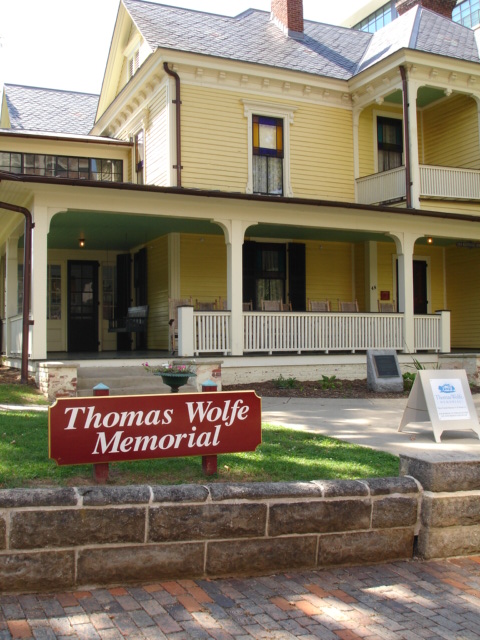
I'm currently enjoying Thomas Wolfe's You Can't Go Home Again. It's been patiently waiting on my shelf for me to pick it up ever since I visited the Old Kentucky Home on a trip to Asheville several years ago. It will definitely take me the rest of the week to finish it. 
 
 
Up next on my to-read list are The Silver Linings Playbook by Matthew Quick, A History of Food in 100 Recipes by William Sitwell (for future book review) and Elaine Neil Orr's A Different Sun (also for future book review).

Also, I'm still currently listening to The Warmth of Other Suns: The Epic Story of America's Migration by Isabel Wilkerson in the car. 

What are you reading?

Friday, May 31, 2013

Book Review: Our Love Could Light the World by Anne Leigh Parrish

Our Love Could Light the World by Anne Leigh Parrish
Published by: She Writes Press
Published on: May 23, 2013
Page Count: 192
Genre: Short stories
My reading format: Paperback mailed to me by author
Available formats: Paperback, Kindle e-book editions


My Review:

There are countless examples of literary families who love each other but show that in interesting ways: the Bennets in Pride and Prejudice, the McCourts in Angela's Ashes, the Wheelers in Revolutionary Road, the Walls family of The Glass Castle and the Berglands in Freedom all come to mind. These are complicated people; many of them have good intentions. And we as readers enjoy a window into their world.

In 2011 Anne Leigh Parrish published her first short story collection entitled All the Roads that Lead From Home (see review). Its 11 stories featured many female characters searching for the missing piece from their lives, children in difficult situations and friendships. The last story in that collection, "Our Love Could Light the World" became the lead story in and the namesake of Parrish's most recently published short story collection. In this story the Dugan family moved into a new home on a street where they didn't get to know their neighbors too well. People living nearby watched from afar the five children, the mother who left for work each morning in a power suit and the father who didn't seem to do much of anything.

Beyond "Our Love Could Light the World," the following 11 stories followed this family chronologically but in some cases with several years elapsing between stories. In these vignettes of Dugan family life readers see a marriage fall apart and another one begin, children grow and develop, and new relationships formed.

Lavinia is the mother of these five children. In her marriage to Potter, Lavinia was in a tough spot: the family breadwinner and emotionally distant from her children. During her marriage to her boss Chip, they can afford for her not to work but she doesn't use much of her freedom to make up for lost time with her children. Like so many women, perhaps she just did the best she could. Her good character really shined through when she confronts daughter Angie's professor/significant other in a way that he knows she means business. Angie remains unaware and therefore unembarrassed about her mother's intervention. Lavinia, who was never much of a cheerleader for her oldest daughter, did a sneaky, wonderful thing for her daughter, showing the complexity of her character in the process.

Angie is perhaps the most intriguing character in the collection. We watch her evolve from a foul-mouthed, green-haired teenager to a young professional committed to helping others in bad situations while she struggles to maintain her own difficult romantic relationship at home. Potter intervenes with his adult daughter's relationship, exhibiting the concern for Angie that I'd been hoping for. Patty, the Dugan children's aunt, plays another important role, particularly in Angie's development as a young adult.  

Parrish has again created memorable, complex characters, but this time we're able to hang on to them even longer.

Four out of five stars

Many thanks to the author for mailing me a copy of her book. 
     

Wednesday, May 22, 2013

DYI Redecorating on a Budget: Miss Mustard Seed

My husband and I are on plan B of living in our house a lot longer than we originally thought when we bought it in 2007. As it turns out, I can't imagine living on any other street. We've got friendly neighbors who have relocated from other parts of Georgia and all over the world. When I work with my office window open in the evening, I can hear children riding their bikes up and down our street and laughing. I know where I can go to borrow a cup of sugar (yep, I've actually done that), park an extra car or share a meal. As a result of living in this house longer than we thought we would, we've been in the process for over a year now to redecorate the living room. What felt like an easy project in the beginning has been slower going than I thought, but we're nearing the end of the journey. Only a few things (mostly pictures for the walls) are left to complete the project.

Knowing that, my in-laws gave me a book for Christmas that speaks to this process and how to do it on a budget (an important part of why it's taking so long to get it done). The book, Inspired You: Breathing New Life into Your Heart and Home, came out of a blog by Marian Parsons aka Miss Mustard Seed. It's full of great ideas for things to do, both big and small, to change up your living space from a DYI, budget-friendly way.

Here's what I most liked. Parsons makes no bones about the fact that yes, the pictures in the book are of her own home. That she lives in. All the time. With a husband and children. And, no, it's not that clean all the time. She's brave enough to include a few photos of how lived-in it looks when the art directors and photographers aren't around, and real life is happening.

Monday, May 20, 2013

Book Review: Manners in Emily Post's Digital World: Living Well Online

The Emily Post Institute, the authority on all things etiquette, has just published an up-to-the-minute guide called Manners in Emily Post’s Digital World: Living Well Online. In keeping with the times, it’s the first-ever e-book to come out of the organization. The book’s author, Daniel Post Senning, has been at the helm of technology at the Emily Post Institute for years, building their first website, figuring out analytics and e-newsletters, and a WordPress blog to answer etiquette questions from the general public, among other things.

In a relatively short book, Senning covers a lot of ground. The book effectively targets the social media/mobile device novice as well as the more experienced user. It suggests the right way to coexist with technology as well as the people you interact with offline: family, friends, coworkers and even store clerks. It discusses in-depth the circumstances under which it’s acceptable to play a game on your mobile phone in public (sometimes OK), take a phone call in a public bathroom (never OK), friend an ex or a coworker online (sometimes OK), or stir up trouble in a chatroom or forum (never OK) .

The book outlines the wonderful advantages of touting your business on Facebook and other social media platforms. It gives advice on determining a website’s credibility. It suggests ways you and your family members can make rules about turning off mobile devices in favor of quality time together.

Perhaps the most power takeaway from the book appears in Chapter 4: Facebook: “You can always delete something you decide you don’t want on your wall [or on Twitter, in an email, on a dating profile, etc.], but you can’t take back the impression it made while it was visible.”

You can follow the Emily Post Institute on Twitter @EmilyPostInst and see what others are tweeting about with the #etiquette hashtag.